

Welcome! We invite you to register.

Titolo 4
La Hoya
San Miguel de Abona

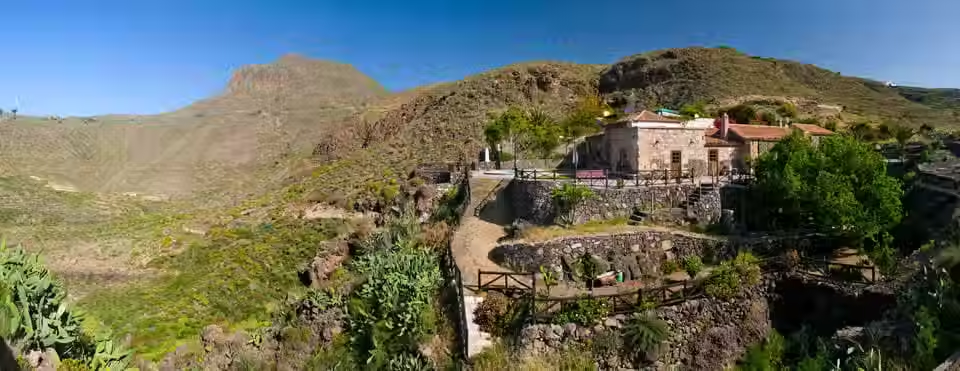

The hamlet of La Hoya is located in the municipality of San Miguel de Abona and is considered one of the oldest human settlements in the Abona region, with documentary references dating from between 1505 and 1522, although its origins could be even earlier due to the possible aboriginal occupation of the area. In 2015, it was declared a Site of Cultural Interest (BIC) in the category of Ethnological Site, thus recognizing its enormous historical and heritage value.
Its location is not accidental. The hamlet sits in a hollow in the lower midlands, which kept it hidden from the sea and protected from pirate raids. Furthermore, it is surrounded by abundant water resources, with springs such as Tamaide, El Lunchón, and La Hoya, essential for the development of agriculture and livestock farming in this arid territory. Added to this is its strategic position at a crossroads of historic routes that connected the coast with Vilaflor and various rural settlements in the south of the island.
During the 19th century, La Hoya was home to a small, settled community. Around 1860, it had twelve single-story houses and one two-story house, all permanently inhabited, and at that time, approximately 54 people lived in the hamlet. From the beginning of the 20th century, a gradual depopulation began, and the place was practically abandoned by the middle of the last century. Currently, some buildings have been restored and are even used for tourism as rural guesthouses.
The architectural ensemble consists of single-story, rectangular houses built with ashlar and pumice blocks and covered with curved, gabled tiles. These buildings are integrated with agricultural terraces that still retain the layer of volcanic sand, a traditional technique that facilitated cultivation in difficult conditions. The entire complex maintains a strong aesthetic and typological coherence characteristic of the rural architecture of southern Tenerife.
Among the most outstanding features is the tile kiln, built in the late 19th century and remarkably well-preserved, a testament to the pottery-making activity linked to the hamlet. Also particularly valuable are the elements related to water management, such as the fountains and sections of the Camino Real del Sur (Royal Road of the South), some still paved and following their original route.
Today, the hamlet of La Hoya stands as a living testament to the rural past of San Miguel de Abona, an enclave that allows us to understand the relationship between humankind, the land, and natural resources. Just a few kilometers from the intense tourist activity of the coast, La Hoya retains a tranquil and authentic atmosphere, making it a key location for understanding the history, culture, and identity of southern Tenerife.


Mess conferma
Nome Utente

Testo della recensione
1
Commenti
Mess.conferma
Where to eat
Guachinche La Montañita
When you enter Guachinche La Montañita, the first thing that strikes you is its neighborhood diner feel, but with the flavor of volcanic soil: grilled meats, homegrown wine, and a taste for authenticity. It's located in San Miguel de Abona, right next to the highway, with nearby parking. Ideal if you're looking for authentic Canarian cuisine and a simple, uncomplicated atmosphere.
What to see
Activities
Beaches
Nightlife
Shopping
Sports
Circuito Motocross
The San Miguel de Abona Motocross Circuit is one of Tenerife's premier motocross venues. Its technically designed volcanic terrain combines jumps, tight turns, and fast sections, offering fun for both experienced and beginner riders. Located in an arid environment overlooking the sea, it is a popular meeting point for motorsports enthusiasts, with a local atmosphere, training sessions, and competitions throughout the year.